The Explorers & Scientists
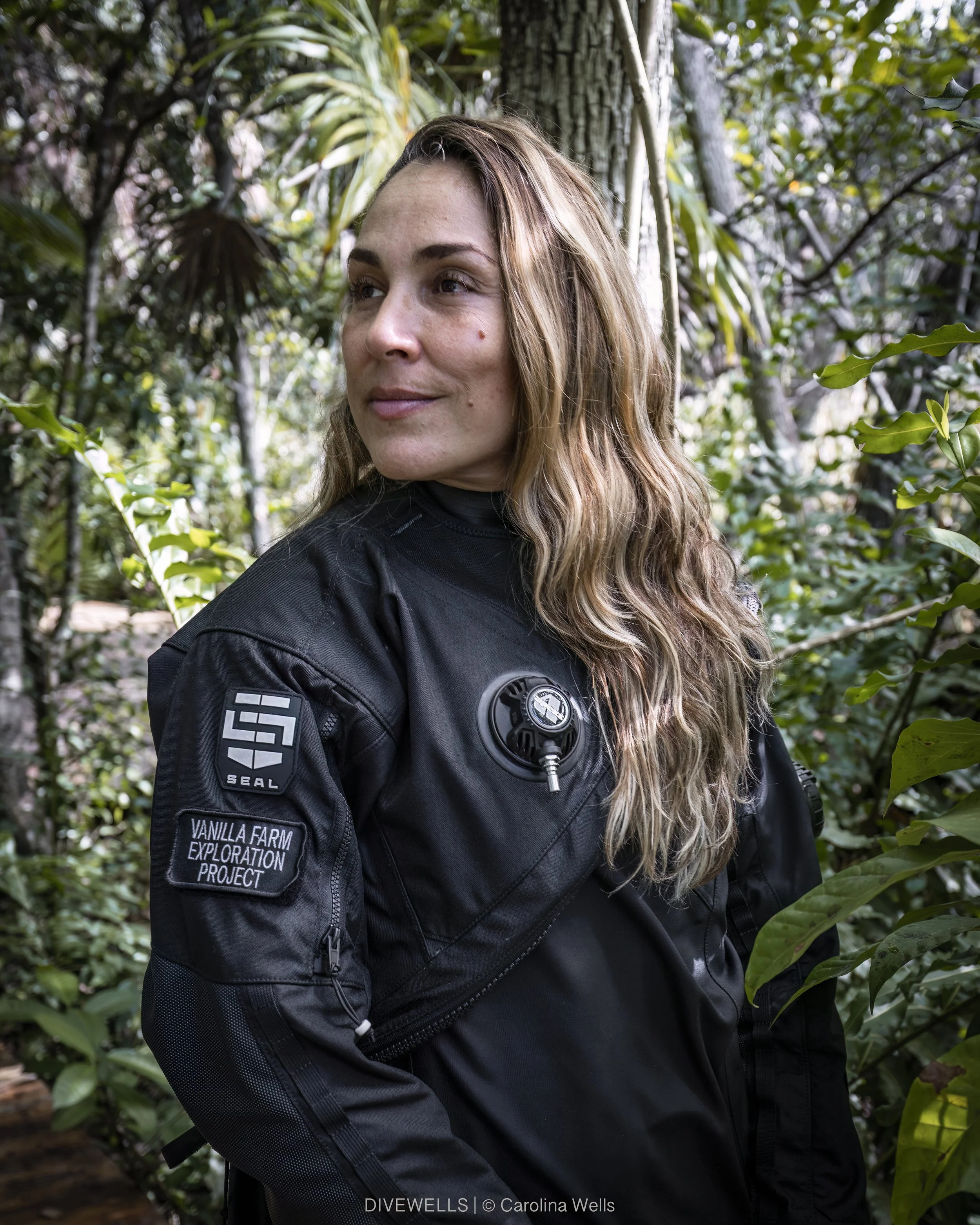
Tamara Adame - Explorer
Tamara (www.cenotegirl.com) grew up in Puerto Morelos, on Mexico's Caribbean coast, in a world made entirely of nature. Mangroves, beaches, reef, jungle, cenotes - these were not destinations but backdrop, the ordinary texture of a childhood spent barefoot and sunburnt, following older kids into places that scared her, never once declining the invitation. She didn't think of herself as an explorer. She was simply someone for whom the world's edges were more interesting than its center.
She came to cave diving not as a sport but as a homecoming. The cenotes had always been there - the blue water ponds in the middle of the jungle, the darkness at the end of those tunnels, visible from the time she was born. What she didn't know, until she learned to go inside, was how extraordinary they were. The cave gave her something the surface world never quite could: a place where her particular way of being - interior, contemplative, attuned to things others leave alone - was not a liability but a gift.
Tamara carries what she describes as a secret - an understanding of the underwater world that she has largely stopped trying to translate for people who will never go there. She has often felt misunderstood in her life, and she has made a kind of peace with it. The caves are where she belongs. They are where she finally makes complete sense to herself.
Her relationship to exploration has matured over time. It is no longer about distance covered or line laid. She wants to connect the cave to its biology, its chemistry, its human history, the animals and plants that depend on the water from above. She wants to show it to the world - not to explain it, but to let the world feel what she feels when she is inside it. In her daily job as a cave diving instructor, she brings knowledge from the exploration and transmits it to the a new generation of Mexican explorers. Recently named a Fellow of the Explorers Club, she now carries a formal version of a title the child barefoot in the mangroves never thought to claim. VANILLA FARM is, in part, her attempt to do exactly that.
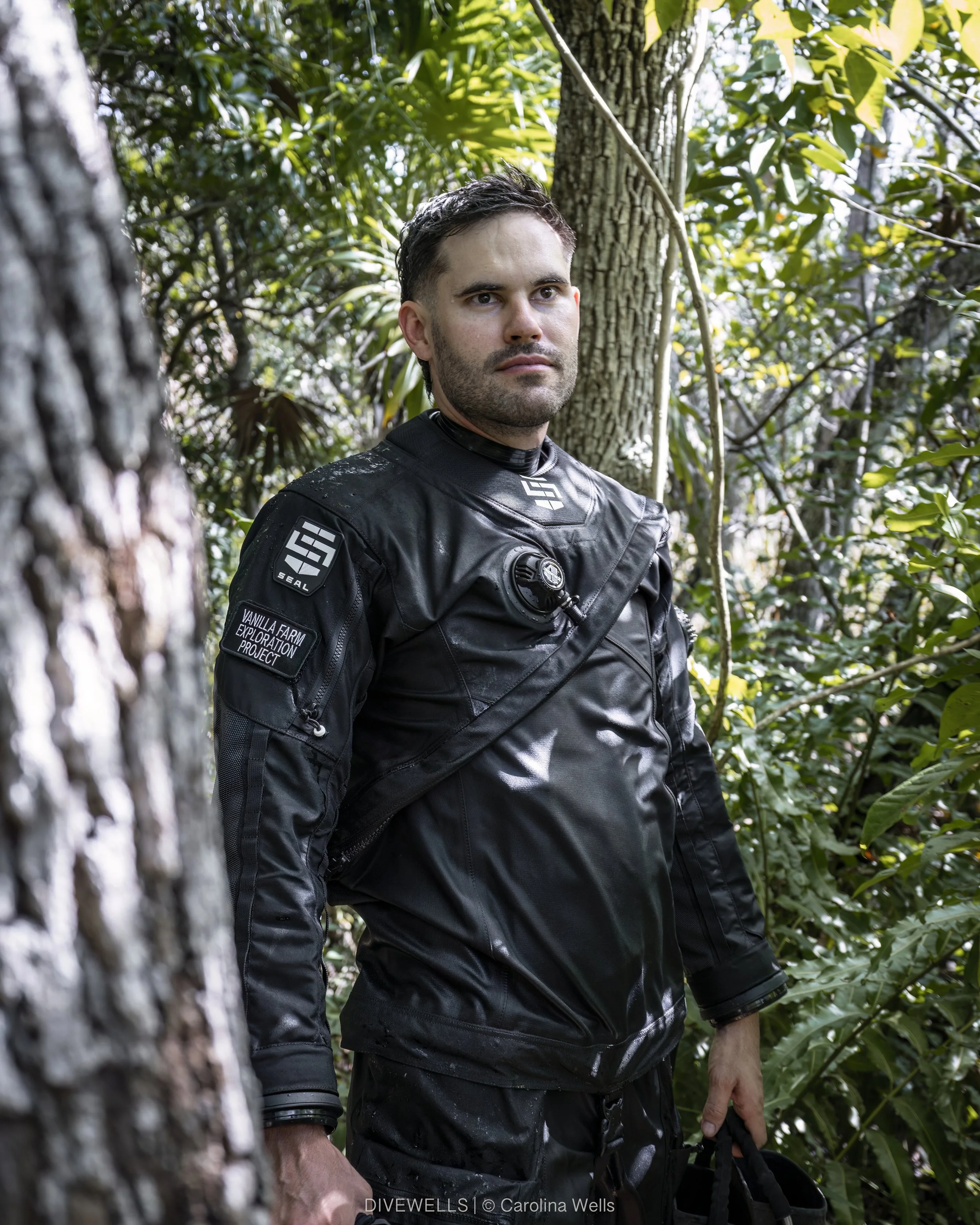
Jack Cleary - Explorer
Jack is Mexico trained Australian cave diver although he comes from a part of Australia with no caves, no cave diving culture, and no inherited relationship to this landscape. He arrived in Tulum by a series of conscious choices and found, almost by accident, that he was unusually suited to something he had no reason to expect. He is studious, methodical, and possessed of a patience that borders on the monastic - qualities that, in most contexts, lead to careers in front of screens. In Tulum they led somewhere else entirely.
Over four years, Jack has walked more than a thousand kilometers through the jungle around Tulum. He has found four new cenotes. The mathematics of this - roughly 250 kilometers of walking per cenote - is not a source of frustration for him but of deep satisfaction. The jungle rewards attention. It reveals itself only to those who are willing to move slowly through it for a very long time. Jack is that person.
The discovery of Vanilla Farm - Jack's journal entry from November 2024 - reads like field notes from the edge of the known world. He describes kicking through zero-visibility black mud, knowing he had destroyed the visibility behind him and the way out was now completely dark. He closes his eyes, because in total darkness, closing your eyes is the rational thing to do. He kicks forward. Something shifts around his waist. He opens his eyes. He is in crystal clear water. The passage continues ahead of him. The floor is pristine calcite. No line. No previous diver. No human presence. Ever.
Jack is not mystical about any of this. He works in logistics programming during the week and walks through jungle on weekends. He will tell you that cave diving is meditative, that it helps him escape from screens, that it is social and enjoyable and not nearly as extreme as people assume. And then his journal will describe a moment that no amount of understatement can contain.
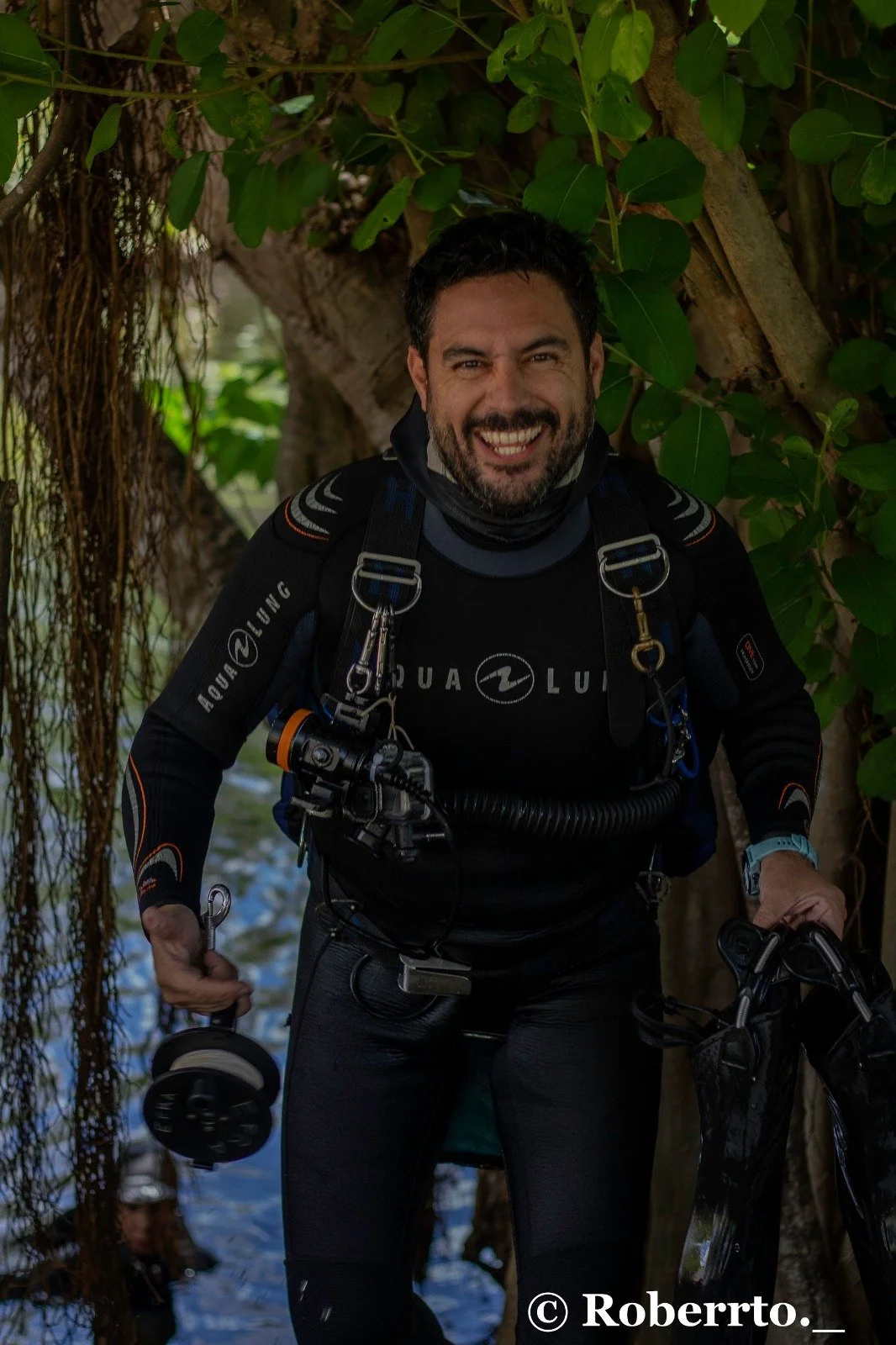
Dr. Efrain Chavez (National Autonomous University of Mexico)
Dr. Efraín M. Chávez Solís is a Mexican biologist and researcher specializing in the eco-physiology and distribution of stygobiont crustaceans — animals that live in underground aquatic environments — in anchialine and karst ecosystems. He holds a Ph.D. from UNAM (National Autonomous University of Mexico) and works as a postdoctoral researcher at UMDI Sisal (Faculty of Sciences). *Efrain is also a cave diver.
His research is particularly relevant to the Yucatan Peninsula's cave and cenote systems. His published work includes new distribution records of subterranean crustaceans from cenotes in Yucatan, documenting species across 32 cenotes. He has also studied the phylogeny of stygobitic Typhlatya shrimps in the Yucatan Peninsula and co-authored research on new amphipod species from cenote systems.
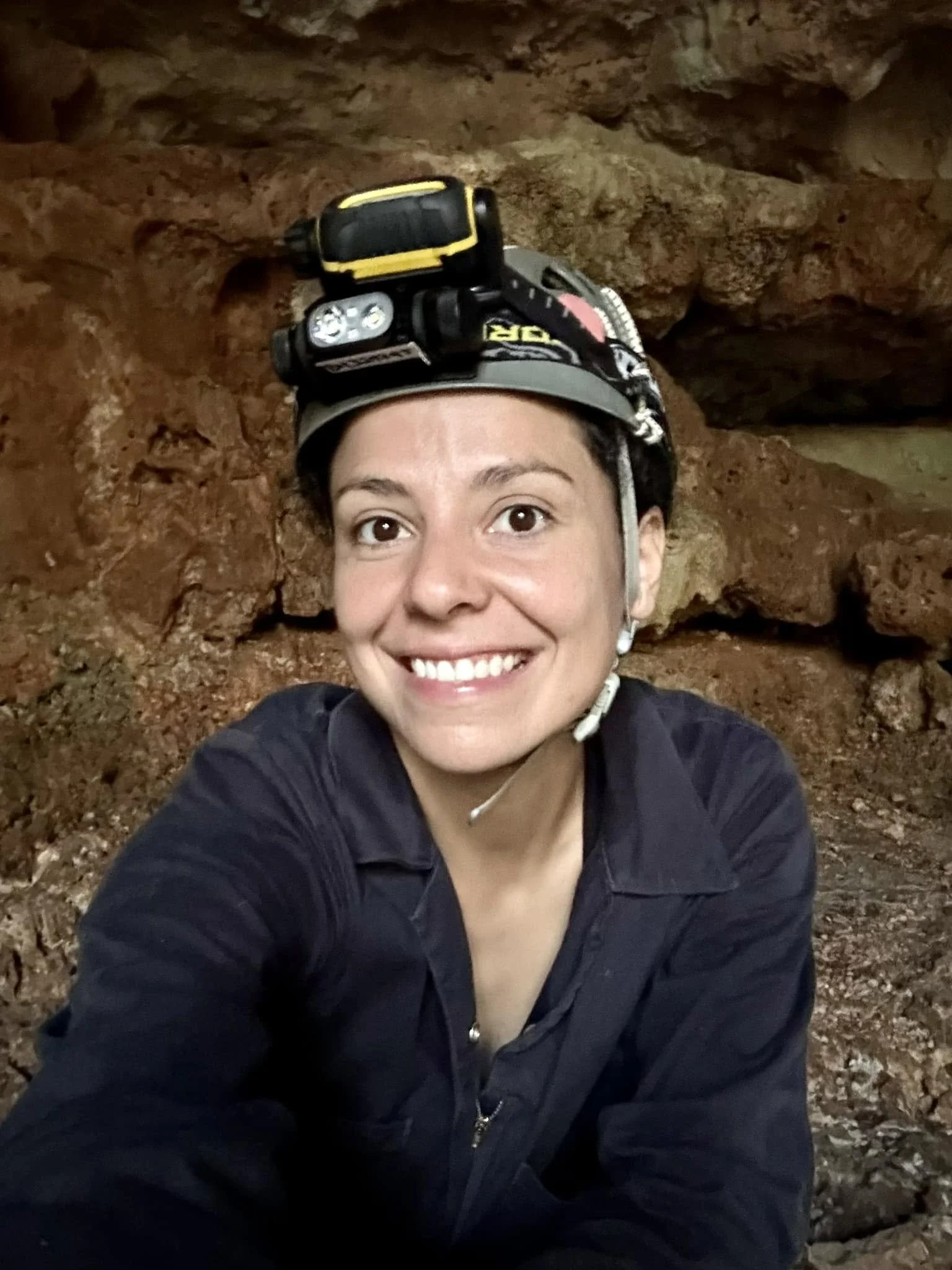
Kay Vilchis Zapata (Underwater photographer and researcher)
Kay Vilchis Zapata is an aerial, terrestrial, and underwater archaeological photogrammetry technician with Mexico’s National Institute of Anthropology and History (INAH), as well as a cave diver, diving instructor, conservation photographer, and karst exploration specialist. With more than a decade of experience exploring caves and cenotes across the Yucatán Peninsula, she combines science, conservation, cultural heritage, and visual storytelling in her work.
Her expertise includes cave exploration, underwater archaeology, digital documentation, photogrammetry, mapping, and rope-access operations. She holds IRATA and SPRAT rope access certifications and has participated in scientific research and exploration projects in Mexico, Belize, Canada, and the United States, collaborating with institutions such as UNAM and the Universities of California and British Columbia.
Currently part of INAH’s Underwater Archaeology Department, Kay documents submerged cultural heritage while using photography and film to reveal hidden underground worlds and promote their conservation.
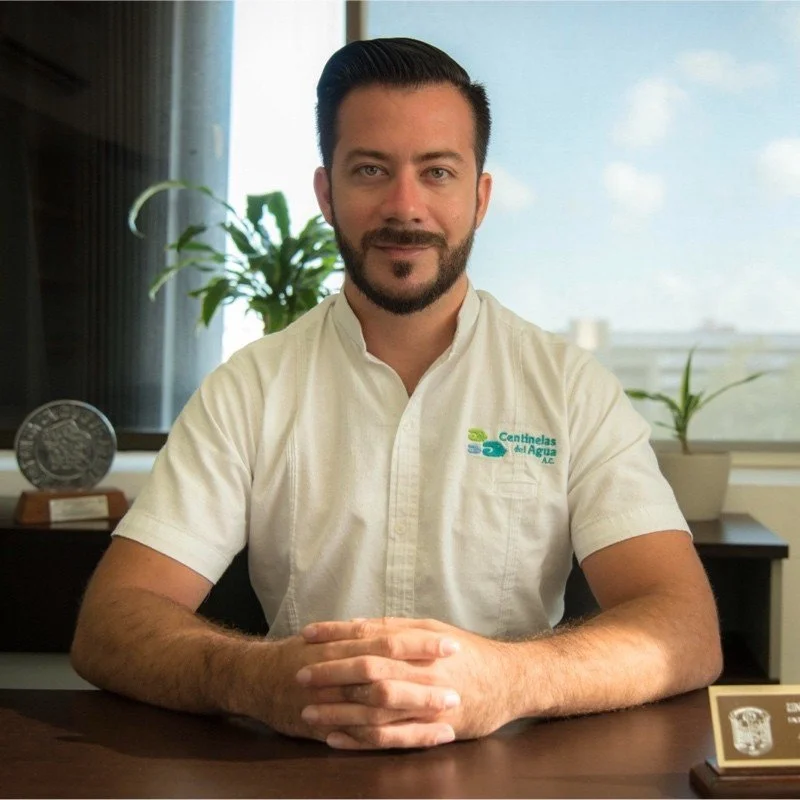
Alejandro López Tamayo (Centinelas del Agua A.C.)
Alejandro López Tamayo is a prominent Mexican water conservation leader and environmental advocate based in Cancún, Quintana Roo.
He holds a master's degree in science and is the Director General of Centinelas del Agua A.C., a 100% Quintana Roo-based civil association, with over 15 years of international executive experience leading conservation organizations.
Centinelas del Agua has spent 14 years working on the preservation and conservation of the Yucatan Peninsula aquifer - a region defined by its cenotes, underground rivers, and interconnected ecosystems stretching from jungle to reef. The organization has focused on bringing potable water access and sanitation to rural communities through the construction of eco-technologies, dry toilets, and rainwater capture systems, while conducting water quality monitoring from watershed to sea.
His work has real policy teeth. The Mexican government awarded him the "Premio al Mérito Ecológico" - the country's highest environmental honor - for his conservation work and for strengthening Mexico's legal framework around the sustainable use of karst systems and cenotes.
On the ground, his organization is actively fighting aquifer contamination. A recent study he led in Playa del Carmen detected elevated nutrient concentrations in monitoring wells and urban cenotes, linked to untreated wastewater discharges - with direct consequences for both the aquifer and coastal sargassum proliferation.
Most recently, he represented the organization at a UN General Assembly dialogue on themes for the 2026 World Water Congress in Dubai, advocating for indigenous community water management rights and their integration into Mexico's constitutional framework.
He's a significant potential contact for the Vanilla Farm documentary - both as a voice on the threats facing these cave systems and as someone with deep institutional relationships with CONANP and Mexican federal environmental agencies.