environmental impact
The Yucatán Peninsula holds more than 30% of Mexico’s freshwater reserves and receives approximately 30 billion cubic meters (1.06 trillion cubic feet) of rainwater recharge every year. It is also the only source of drinking water for many people.
The Yucatán Peninsula aquifer hosts the largest flooded cave systems in the world and feeds the Mayan jungle, the second-largest continuous tropical rainforest in the Americas. The tapir, the jaguar, and many other key species depend directly on the water contained within this vast reservoir of caves, aguadas, and petenes, as there are no surface rivers in this region due to the porous characteristics of the limestone that forms the Yucatán Peninsula.
Access to clean water, preserving water quality, and understanding that freshwater flows from land to the ocean through a complex ecosystem connectivity system that links reefs, mangroves, estuaries, cenotes, and anchialine caves are paramount to any conservation effort in this region.
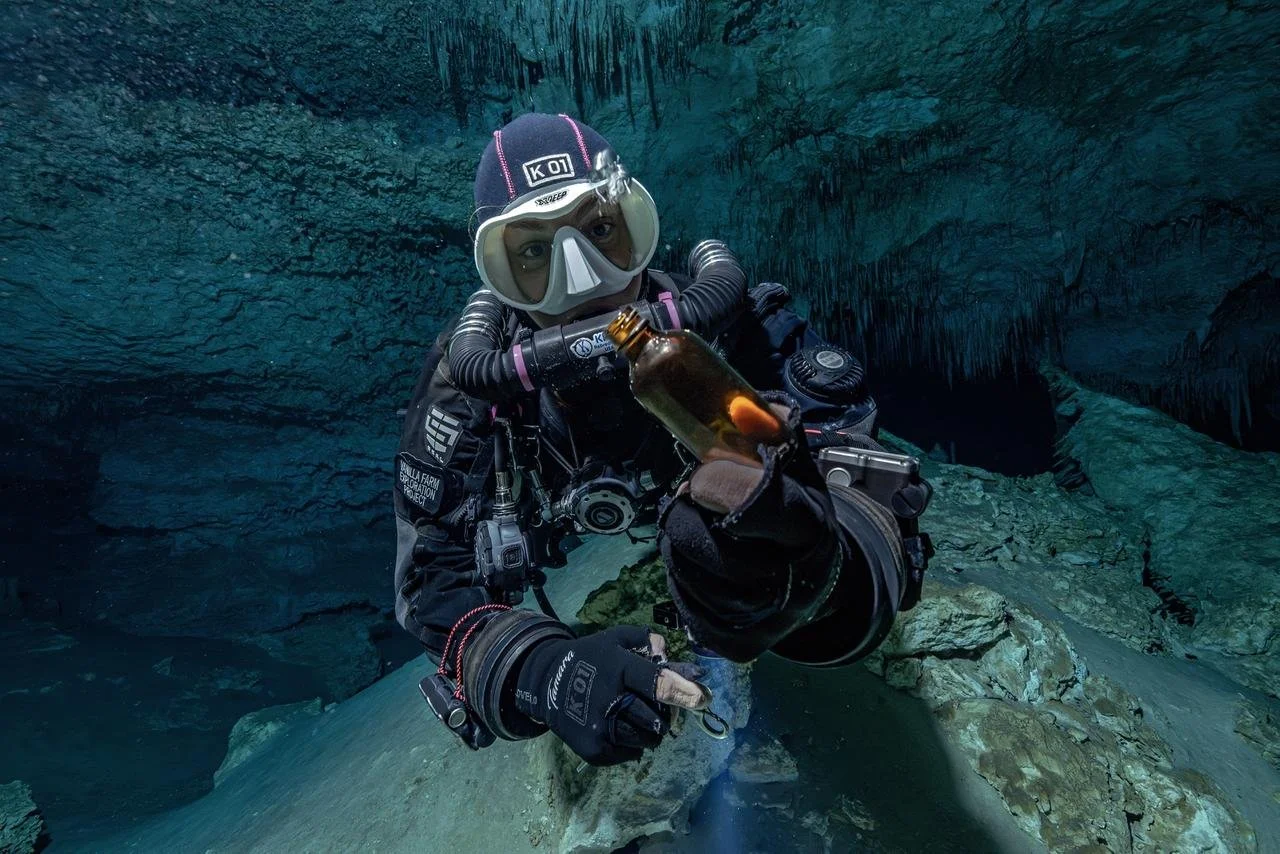
A basic baseline water quality test was conducted in the Vanilla Farm cave system. The question was: Is the water in this cave clean and undisturbed by the human development of the area? Working with Centinelas del Agua, we analyzed three water samples collected at specific locations.
The first sample was taken at the entrance of the original Vanilla Farm cenote. The second sample was taken at the furthest point of exploration at the time, 3.5 km inside the cave. The final sample was taken halfway between the entrance and the furthest point.
Analyzing these samples would help us understand whether the water is clean and, if so, how this cave has remained seemingly unaffected by urban settlement and development. If the water were not clean, additional testing would be required to determine what types of contaminants were present and where they might potentially be coming from.
water conservation
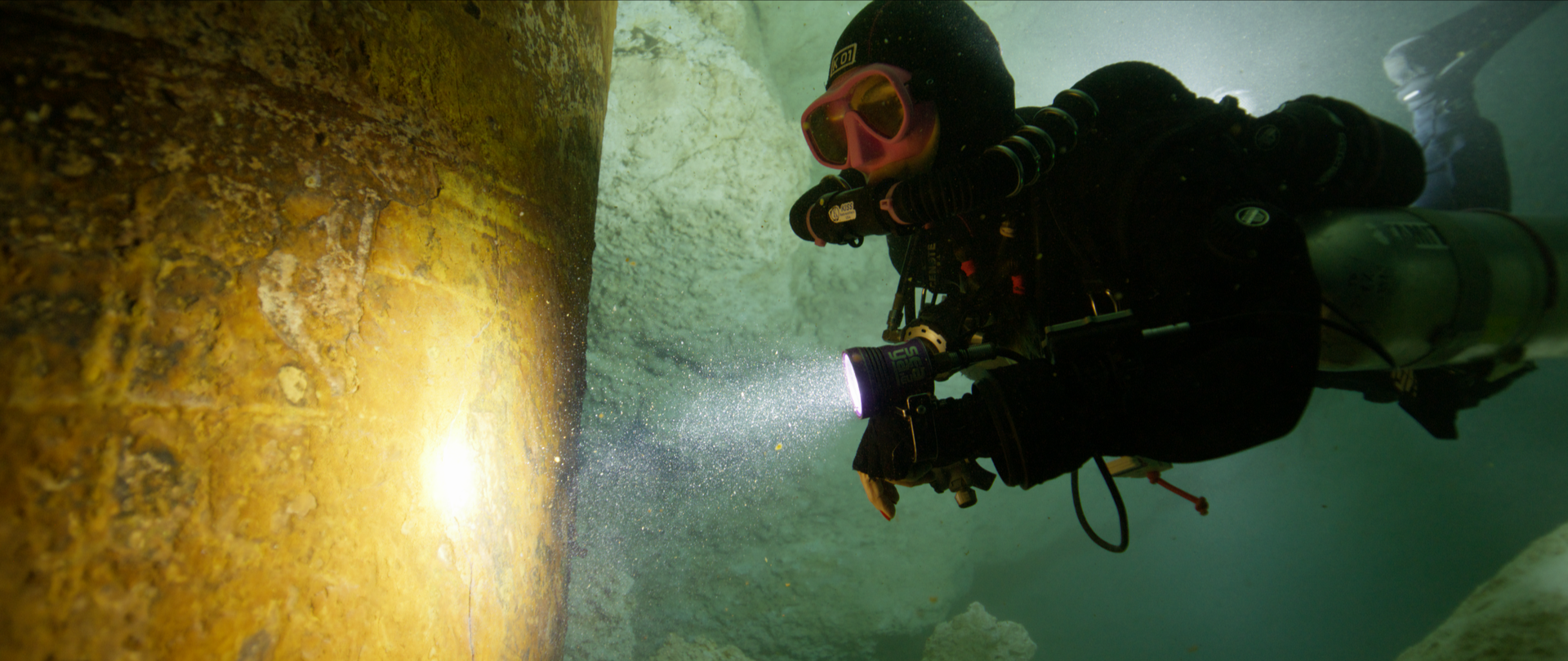
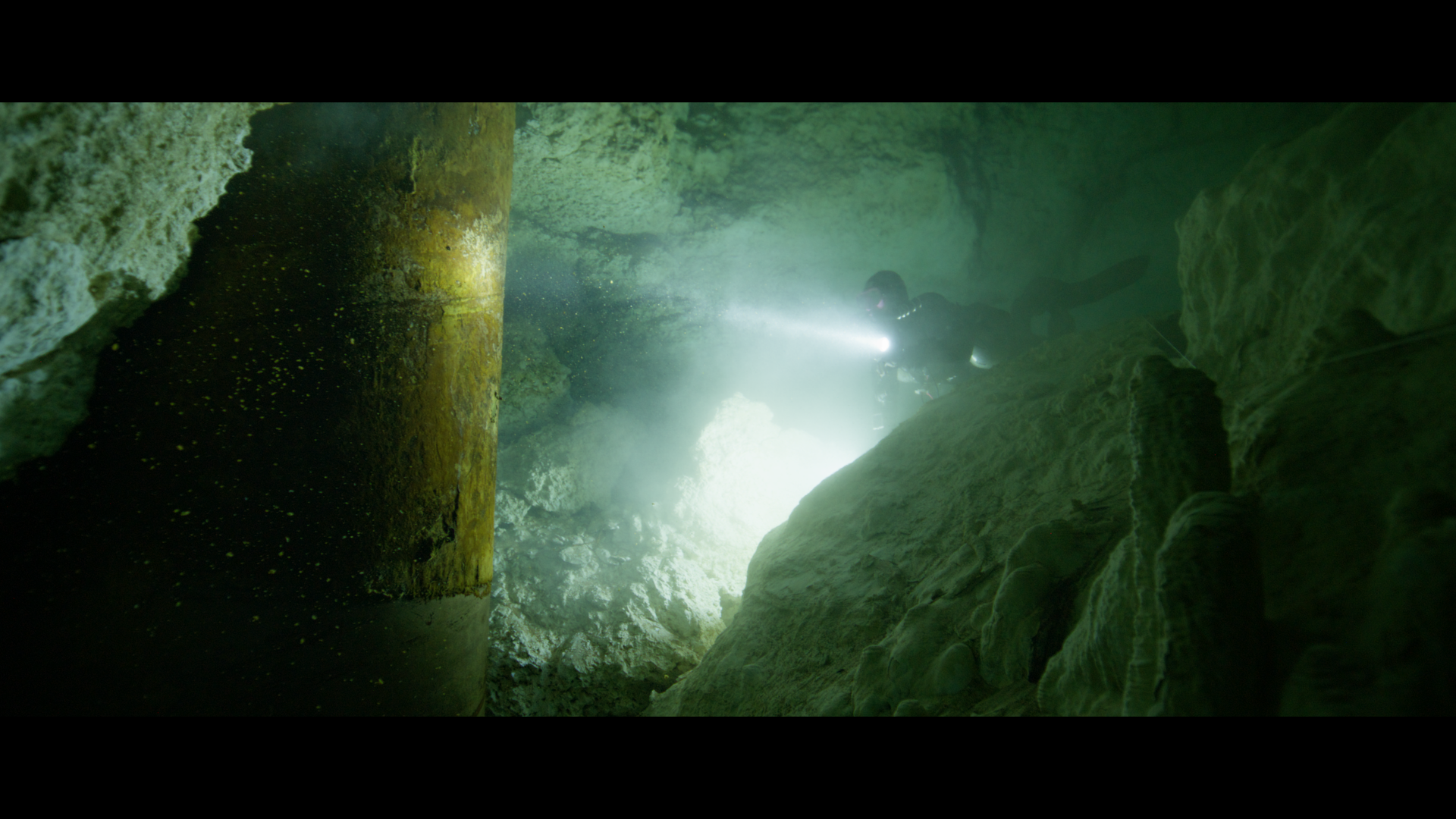
Tulum has become one of the fastest-growing tourist destinations in the Western Hemisphere. Hotels, restaurants, and infrastructure are appearing at a pace the jungle cannot absorb. The Mexican government has constructed the Tren Maya - a railway system cutting through the peninsula - and in the process driven massive concrete pylons deep into the ground. Cave divers exploring systems along the railway corridor have begun finding those pylons embedded in cave ceilings. Some are already beginning to disintegrate in the saltwater. Concrete contains compounds - sulfates, alkalis, heavy metals - that, once dissolved into the water column, alter the precise chemistry of the freshwater lens. The damage is invisible to the naked eye and irreversible. There is no alarm, no visible intrusion. The water still looks impossibly clear. But something is changing.
The people most aware of this change are the ones who go underwater to see it. But the consequences belong to everyone. The same water that flows through these ancient passages supplies the region's communities, its coastline, its future. VANILLA FARM is a documentary that takes a camera into this hidden world not just to capture its beauty - but to bear witness to what unchecked development is doing to it, beneath our feet, out of sight, one pylon at a time.
tren maya